Small businesses and cybersecurity startups often have an excellent products and services, but they struggle with visibility. You may have outstanding technical expertise, but if your buyers don’t know where to find you, your growth can stall.
CyberBridge is here to tell you there’s still hope. Cybersecurity marketing for small businesses doesn’t require a massive budget. It requires focus, clarity, and smart execution.
Below are eight practical, low cost marketing strategies for small businesses and cybersecurity startups looking to grow. At the end, we also share examples of four smaller cybersecurity companies that are doing marketing particularly well.
1. Define a Specific, High-Value Niche
A common marketing mistake we see cybersecurity startups make is trying to target every company that needs security. When you’re smaller or still growing, specificity is essential.
Instead, focus on a more defined niche, which can bring the following benefits:
- Clearer messaging
- Improved SEO performance
- Greater referral potential
- Shorter sales cycles
Some cybersecurity companies use account-based marketing (ABM) strategies to target specific high-value organizations instead of marketing broadly. ABM allows you to develop messaging that reflects their specific priorities and challenges. Instead of broad outreach or one-size-fits-all campaigns, the focus is on building stronger relationships with a smaller group of the right type of clients.
2. Educate Buyers to Build Trust
Cybersecurity buyers are often research-driven and actively seek information to minimize risk. As a result, educational content helps build trust before any sales conversation even begins. Research from Gartner shows that B2B buyers spend only about 17% of the purchasing journey meeting with potential suppliers, meaning most of their decision making happens independently through content and peer validation. Educational content plays a critical role in building trust and credibility before any sales conversation begins.
One low-cost and easy way to educate buyers is to share real-world case studies or articles on your LinkedIn profile explaining common cybersecurity challenges faced by small businesses. This demonstrates expertise and strengthens credibility.
You don’t need to post content daily, but your insights must be consistent and deliver high value.
3. Build SEO Around High-Intent Searches
SEO can feel overwhelming for small businesses and cybersecurity startups. Search engines need time to recognize your website and pages as relevant and authoritative, which means results rarely happen overnight.
For small businesses, there are practical steps that can accelerate early traction:
- Choose 5 to 10 high-intent keywords to focus on
- Structure content around dedicated service pages
- Clear service positioning
- Strong internal linking
These focused actions give smaller cybersecurity businesses a faster path to visibility while long-term authority continues to develop. Here’s more about SEO for Cybersecurity companies, including a 90-Day Action Plan for Cybersecurity SEO Success.
Remember: SEO isn’t about traffic volume, it’s about quality traffic!
4. Use LinkedIn for Marketing Strategically
For small businesses, LinkedIn is often a more cost-effective channel. Maintaining a consistent presence on the platform can quickly build credibility at a low cost.
Instead of focusing solely on sales, also concentrate on:
- Sharing insights from client work (without breaching confidentiality)
- Commenting on industry trends
- Engaging with compliance leaders
- Publishing short-form educational content
- Host Targeted Webinars or Virtual Workshops
5. Small Events Are Effective
You don’t need high-end production or an audience of 1,000 people.A webinar on LinkedIn Live or Zoom with 20 attendees who are genuine prospects is far more valuable.
A few effective formats include:
- Delivering 15-minute “Security Briefs” on trending threats (such as a new phishing scam)
- Keeping the format informal and interactive
- Focusing on solving one specific problem
Webinars can generate qualified leads and establish your authority in cybersecurity at a relatively low cost.
6. Implement Simple Marketing Automation
You don’t need enterprise-level systems. However, automation helps ensure prospects don’t lose interest simply because your team is busy.
Basic marketing automation can include:
- A short self-assessment or checklist that delivers instant insights and invites optional email follow-up
- A periodic educational newsletter
Follow-up emails after webinar registrations
7. Focus on Reputation and Reviews
Cybersecurity and trust go hand in hand.
Encourage satisfied clients to:
- Provide skills or competency reviews
- Leave recommendations on LinkedIn
- Share short testimonials
- Offer referrals to colleagues
Positive feedback can significantly increase conversion rates.
8. Work with a Cybersecurity Marketing Agency
Partnering with an agency that provides marketing services tailored specifically to the cybersecurity sector can accelerate your growth. CyberBridge focuses on helping small cybersecurity businesses and startups grow without overextending their resources.
How We Work with Small Businesses
CyberBridge Marketing understands that small businesses and cybersecurity startups don’t need or want overpriced contracts that aren’t aligned with their company’s strategy.
We only offer and implement strategies that make sense for your goals, company size, sales capacity, and available resources. Nothing generic or unnecessarily complex like enterprise-level programs.
We offer flexible engagement models:
- Project-Based Support: Ideal for SEO optimization, keyword development, or campaign launches.
- Partially Managed Marketing: We collaborate with your internal team to develop strategy, guide content, and optimize performance.
- Fully Managed Marketing: We act as your outsourced marketing department, handling strategy, execution, and optimization.
“I love working with small businesses. There’s something powerful about the scrappy, prove-yourself stage. Helping small cybersecurity businesses move from unknown to trusted brands is the work I care about most.” – Lauren, Founder at CyberBridge

Schedule a free consultation with our founder Lauren here.
Examples of Small Cybersecurity Companies Doing Marketing Well
To illustrate the cybersecurity marketing landscape, here are some companies that demonstrate how strategic and focused marketing can drive strong growth without lavish budgets.
PlutoSec
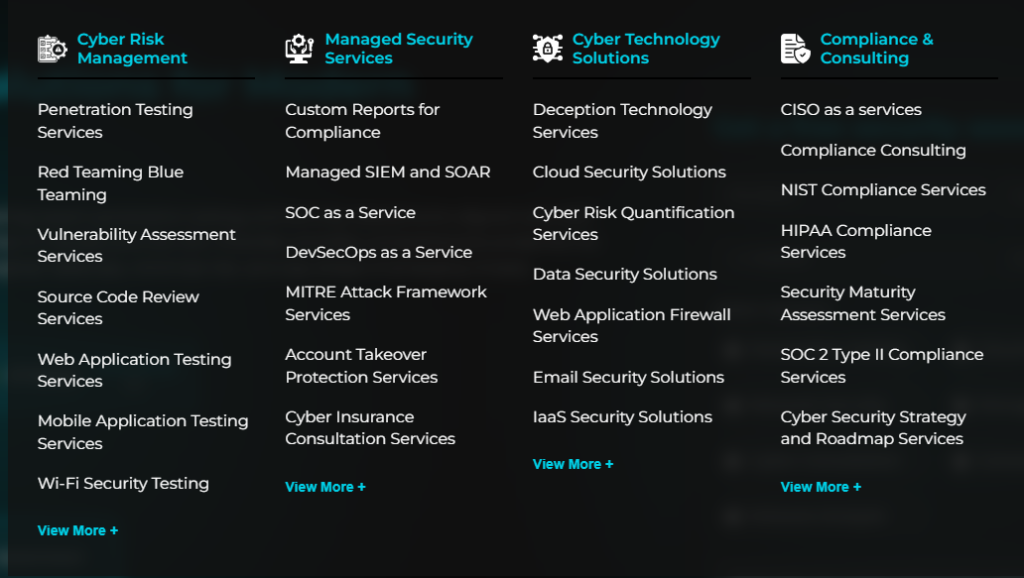
PlutoSec is a Toronto-based company that has been building credibility by clearly defining the focus of its services and demonstrating the success of its clients. Instead of providing a generic security positioning, it maintains solid evaluation profiles and emphasizes expertise in specific niches.
Clear service segmentation does more than organize your website. It signals specialization to buyers and search engines. By defining distinct service categories and niche capabilities, companies like PlutoSec strengthen topical authority, improve SEO visibility, and attract higher intent prospects who know exactly what they need.
Field Effect
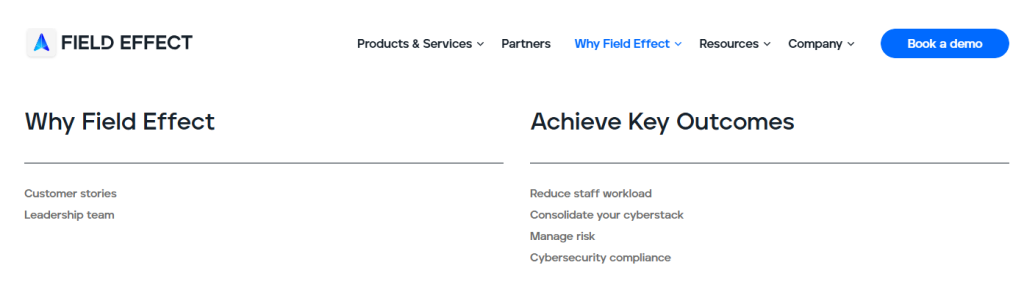
Field Effect’s positioning revolves around managed detection and response solutions that are customized for small and medium-sized businesses. Its marketing, emphasized through education, uses simple messaging, making complex security solutions easier for small businesses to understand and adopt.
The image below highlights how Field Effect frames its messaging around business outcomes rather than technical features. By focusing on results like reducing staff workload and consolidating the cyber stack, the company makes complex cybersecurity solutions more tangible and relevant for business decision makers.
Beauceron Security
Distinguished by its focus on cybersecurity awareness and human risk management, Beauceron Security employs a marketing approach that emphasizes clarity, simplicity, and practical results. This helps buyers feel less overwhelmed by technical concepts while building still building trust.

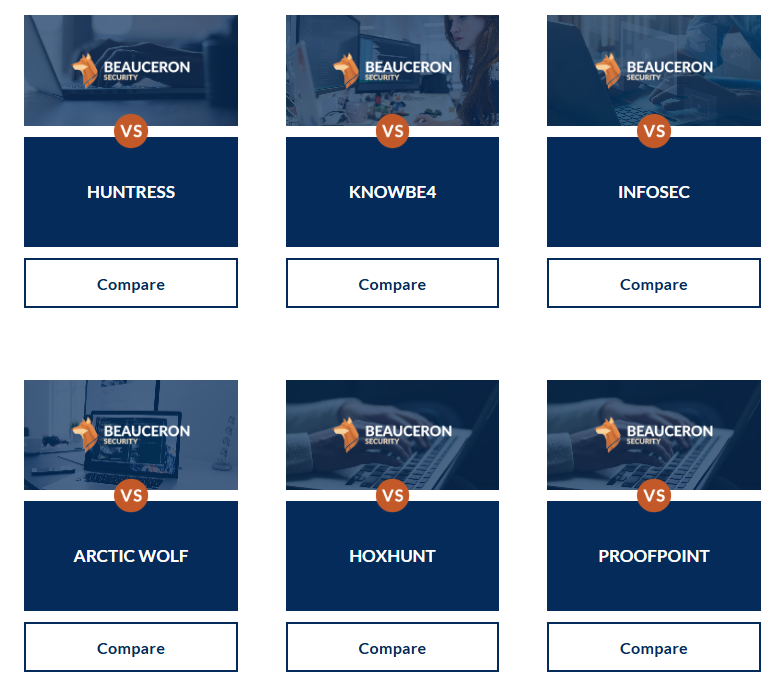
Another thing that Beauceron Security does well is position themselves clearly against their competitors. They do a full review of key competitors, such as Huntress, KnowBe4, and Arctic Wolf. They look at criteria like overall positioning, technical capabilities, and why buyers typically choose each solution for their businesses.
Rhino Security Labs
Rhino Security Labs have built strong visibility through high-quality technical content and research publications. It establishes authority within the cybersecurity community by sharing blog posts and security findings. This content-driven and education-focused strategy demonstrates how thought leadership can serve as a powerful, low-cost marketing engine for smaller companies.

Growth Is About Focus, Not Budget
You don’t need excessive spending to perform well in cybersecurity marketing as a small business. It requires:
- Clear positioningConsistent authority-building
- Strategic partnerships
- Smart SEO
- Aligned execution
When your marketing is aligned with your company’s size and stage of growth, it becomes a growth engine, not a cost center.
The key to sustainable growth isn’t doing everything. It’s doing the right things consistently.
Ready to build a smarter marketing engine? Book a free consultation with CyberBridge Marketing today and start turning your expertise into demand.
Let’s Work Together
Ready to grow your business? Let’s bridge the gap between your expertise and your ideal clients.